Branding · Essay
What a brand identity includes, beyond the logo
The logo gets the attention. The system around it does the work. A tour of everything a complete brand identity includes.
Most founders start with the logo. It makes sense. It's the most visible piece, it goes on the shopfront first, and it's the part everyone in the family group chat will have an opinion about.
On its own, a logo is a signature without the letter. A brand identity is the full system around it. It's the set of rules and assets that make a business look and sound like itself in every place it shows up.
The parts people see
These carry most of the design hours, and most of the first impressions.
- Logo, with variations. A primary version, a simplified mark for small sizes like app icons and profile pictures, and versions for light and dark backgrounds.
- Colour palette. Usually two or three main colours and a few supporting ones, defined with exact codes for screen (HEX and RGB) and print (CMYK).
- Typography. One or two typefaces with clear jobs, plus an Arabic pairing when the brand works in both languages.
- Graphic elements. Patterns, icons, shapes and an image style that make your work recognisable with the logo cropped out.
The parts people use
An identity earns its keep in daily use. That means files and templates your team can pick up without calling a designer.
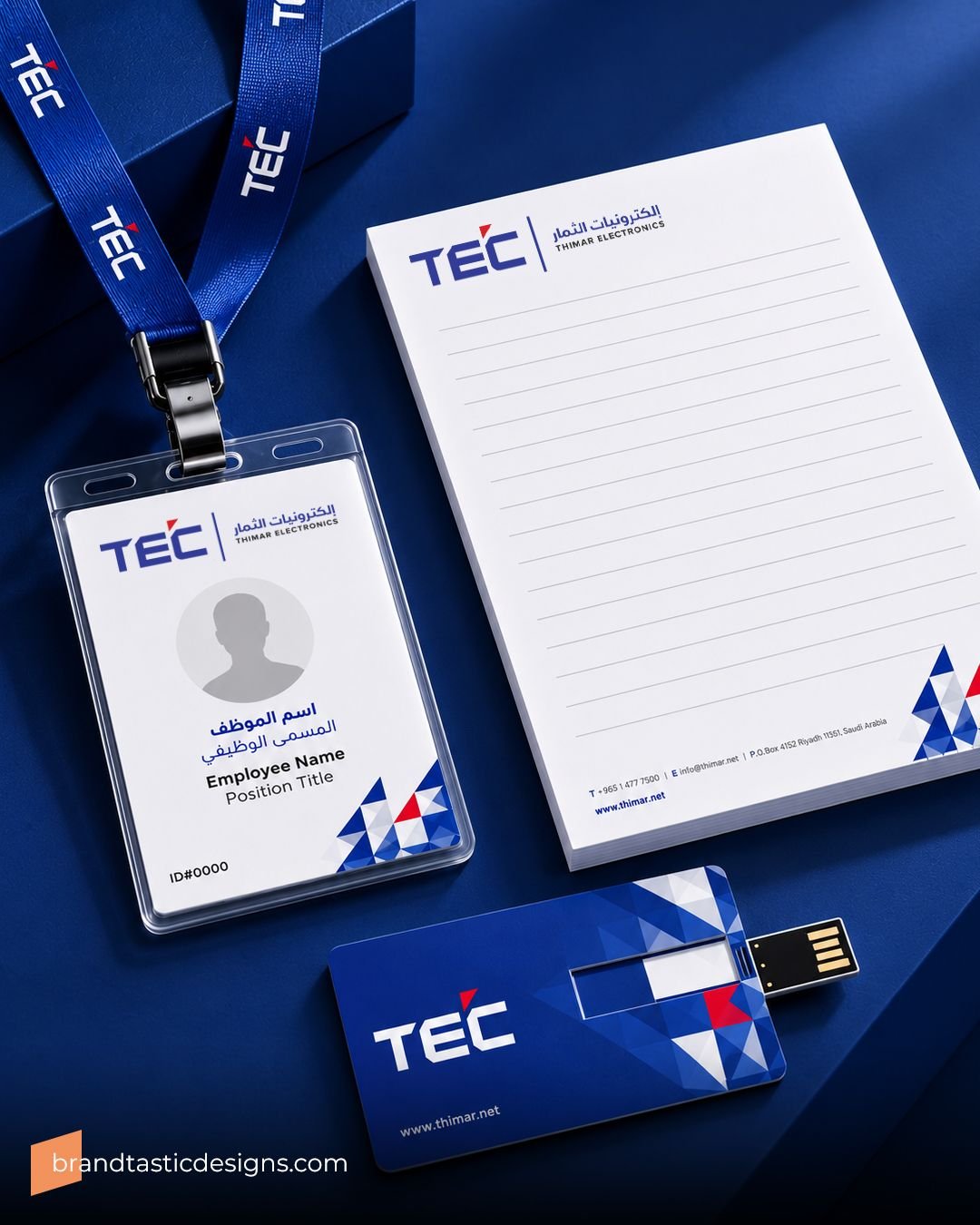
- Stationery, from business cards and letterheads to envelopes and email signatures.
- Presentation templates, so every sales deck looks like it came from the same company.
- Social media templates and a defined grid style.
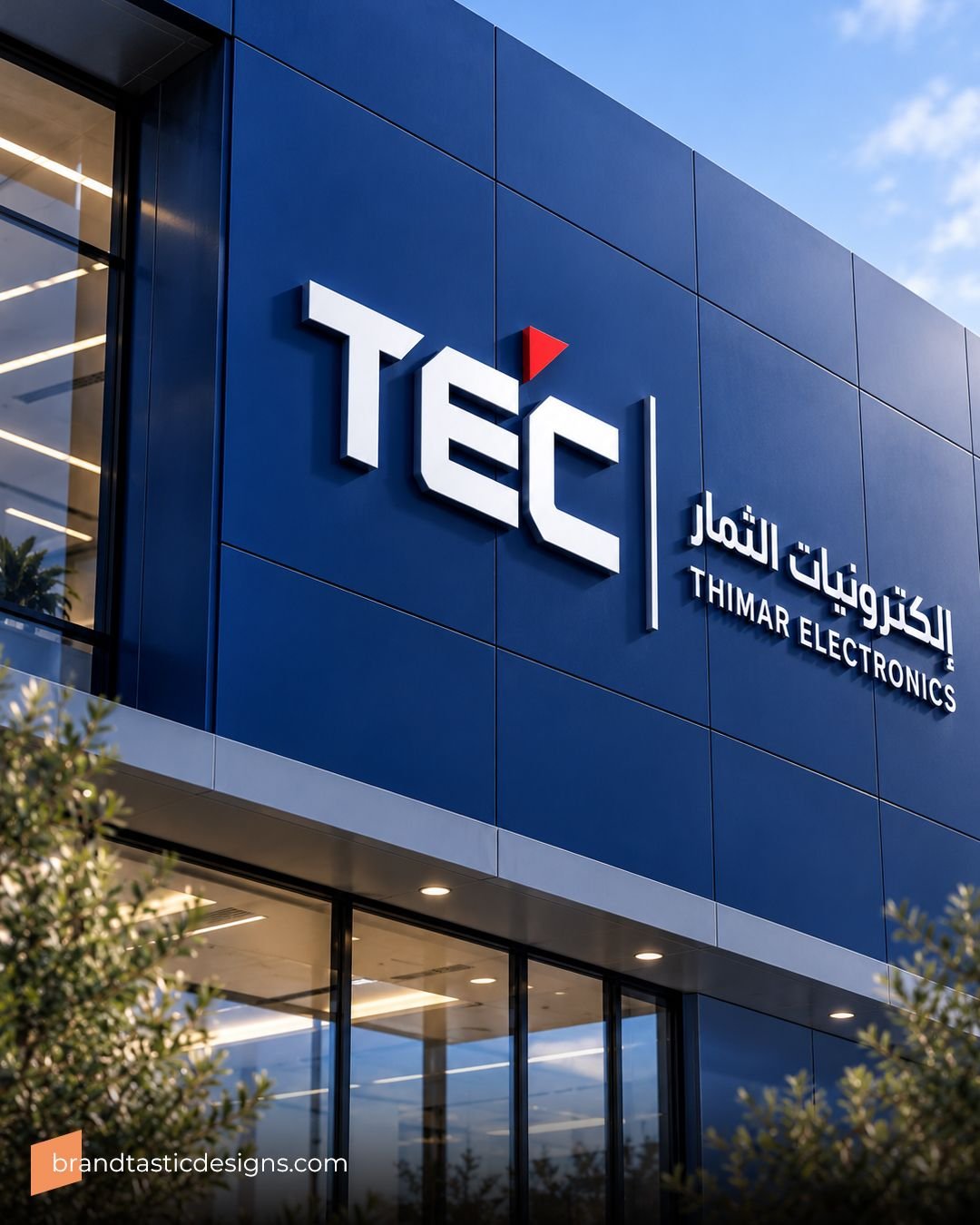
- Signage, uniforms and packaging, depending on the business.
A logo becomes a brand through repetition. Same colours, same type, same tone, everywhere a customer meets you.
The parts people hear
Tone of voice belongs to the identity too. It covers how the brand writes captions, answers WhatsApp messages and phrases a price list. A clinic and a burger joint can both be friendly. They won't be friendly in the same way.
The rulebook
All of this lives in brand guidelines, a document that explains how to use each element correctly. It keeps the identity intact when a printer, a new hire or a freelancer gets involved. We break one down page by page in What goes into brand guidelines.
Where to start
If the budget is tight, start with the logo and its guidelines and add the rest as the business grows. If you're opening an office, a shop or a restaurant in the next few months, a full identity in one go keeps everything designed as one system. With our packages, it also costs less than buying the logo and stationery separately.
Signs the identity is doing too little
- Your Instagram, shopfront and invoices look like three different companies.
- Every new flyer starts with someone asking where the logo file is.
- Staff pick colours by eye, and the brand green has quietly become four greens.
- Your Arabic and English materials feel unrelated.
Questions people ask
What is the difference between a logo and a brand identity?
A logo is a single mark. A brand identity is the full system around it, including colours, typography, graphic elements, templates, tone of voice and the guidelines that tie them together.
What should a brand identity package include?
At minimum, a logo with variations, a colour palette, typography and brand guidelines. Most businesses also need stationery, presentation and social media templates, plus items specific to their sector, such as packaging or signage.
How long does a brand identity take?
It depends on the scope. Our Logo Design package takes 5 business days and our Full Corporate Identity takes 7 business days.
See the Full Corporate Identity
Written by Brandtastic Design Studio.